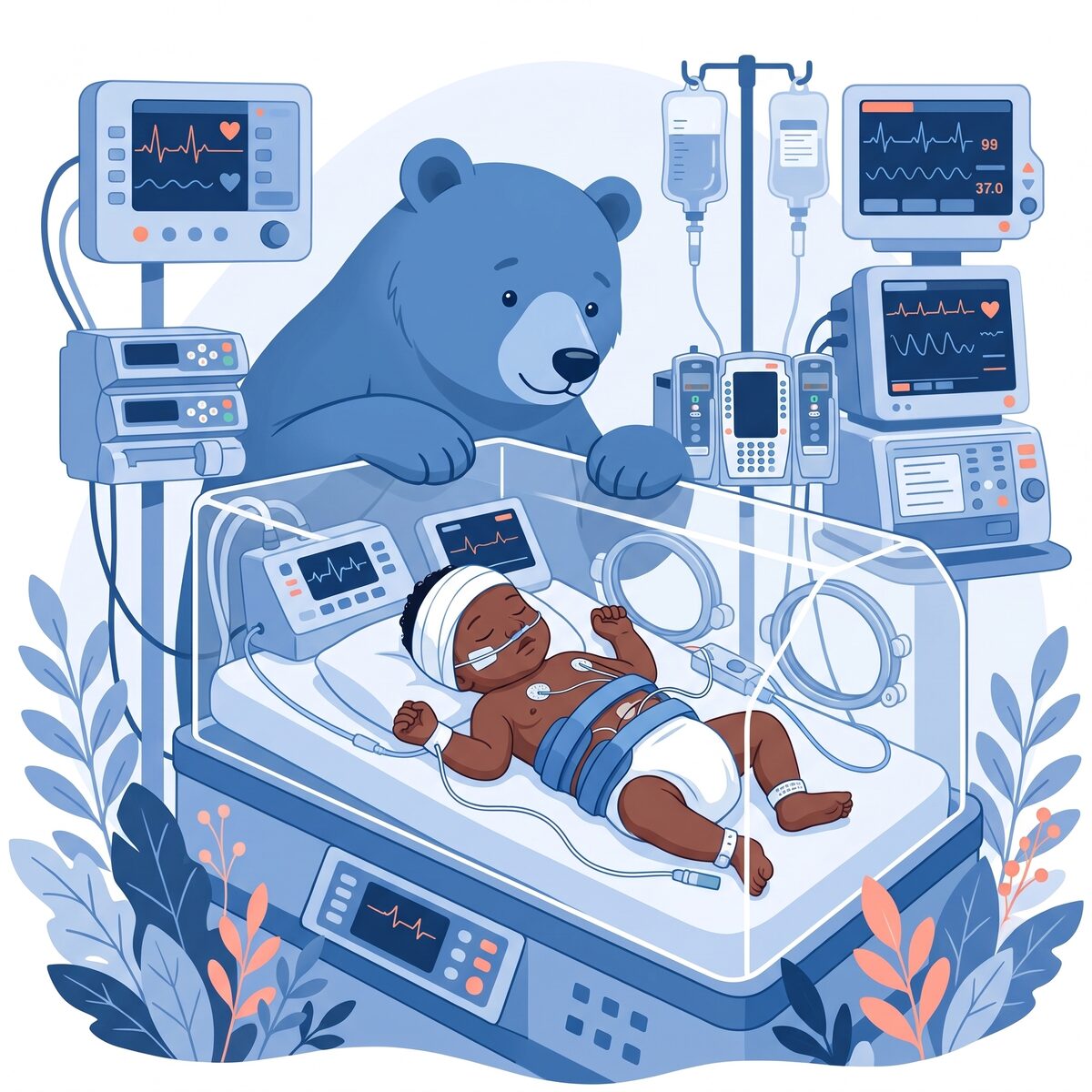
"Nobody Got Worried" Kendra's Story of a Baby Not Breathing at Birth, HIE, and Cerebral Palsy
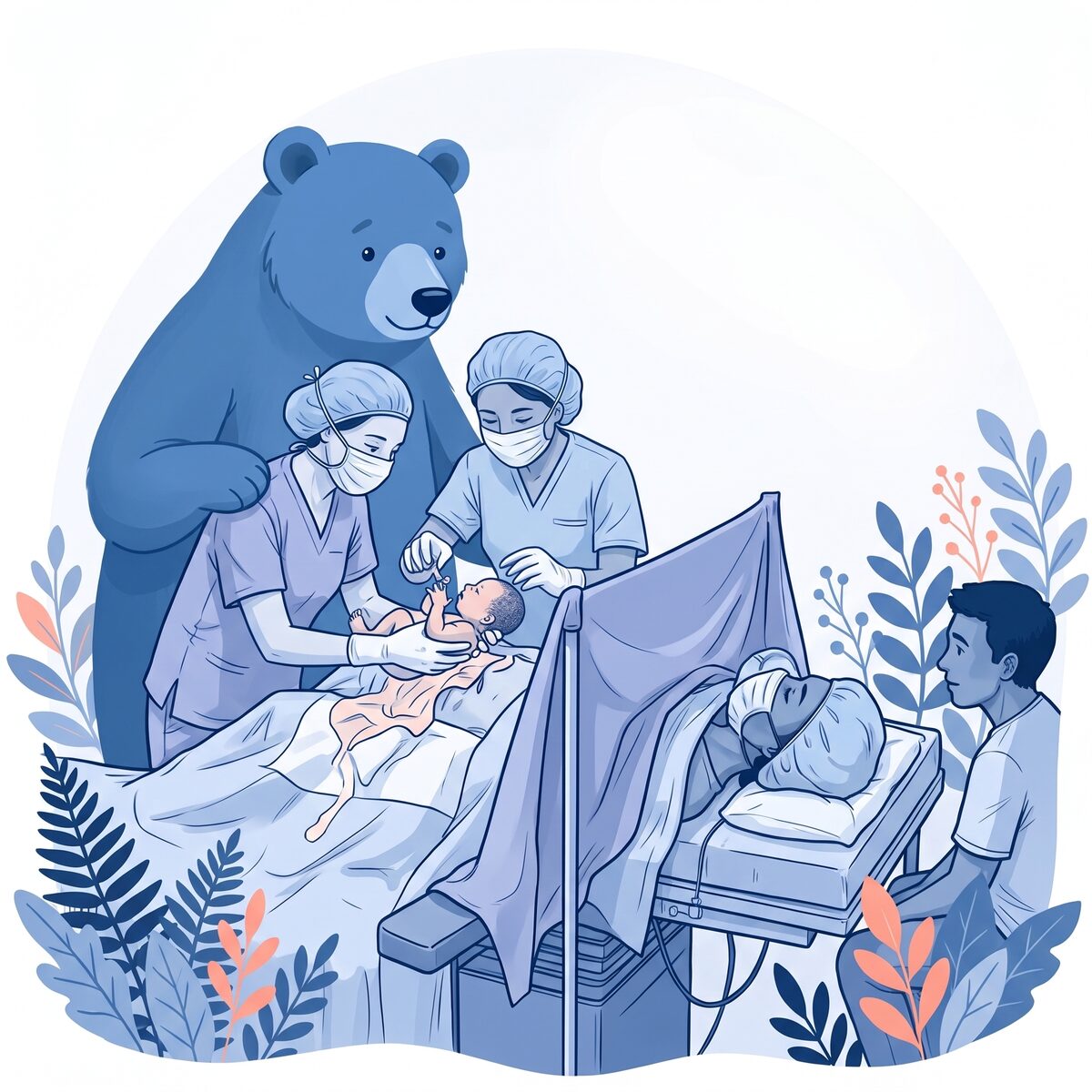
Parents come to Mama Bear Law still replaying the day their baby was born. Many are carrying questions nobody has answered, along with the exhaustion of caring for a child whose future no one can promise. No parent should have to carry those questions alone. This is one of their stories.
Kendra's story
"Something just doesn't feel right"
"I kept telling doctors, like, something just doesn't feel right to me," Kendra says. "And they kept telling me, oh, well, everything's fine. All your scans are fine. The baby's fine."
Kendra had been through a C-section before, so this one was planned from the start. Her son was breech, positioned bottom first instead of head first, and at 37 weeks he was old enough to be considered term.
Even so, this pregnancy had felt different to her from the start, and she wasn't shy about saying it.
They told her a breech baby simply feels different, and looking back, she allows that they may have been right. "That could have very well been true," she says.
Her memory and her chart describe that day differently. Kendra remembers going into labor, feeling her son go under stress, and waiting hours for the decision to operate. The chart describes a planned repeat C-section with no labor and a reassuring heart tracing before surgery.
Either way, by the time she reached the operating room, everyone expected a healthy baby. "He was born at what I thought was going to be, like, perfectly healthy," she says.
"Nobody got worried"
Her son was born at 4:52 in the afternoon. "The moment he was born, he let out a cry," Kendra remembers. "I heard it, and I'll play it over in my dreams forever."
Right after that cry, she heard a sound that terrified her.
"I'll never forget the sound of him aspirating," she says. "It was the scariest gurgle I've ever heard."
Lying on the operating table, she couldn't see what was happening across the room, so she watched her anesthesiologist instead. One look at his face told her something wasn't right.
"The baby's having a little bit of trouble breathing," Kendra remembers him telling her. "Everything's going to be okay."
What frightened her most was how calm the room stayed. "There's nobody rushing around the room. There's just a whole bunch of people in there," she says. "Nobody got worried. Nobody got anxious."
Thirty-four seconds
Her husband, Marcus, had his phone out to record their son's first minutes, the way so many parents do. The video he saved is 34 seconds long.
"My son is blue and purple. His whole body is blue and purple," Kendra says. "His chest does not move a single time in this 34-second video."
In the video, a staff member is drying him off. "They're just very calmly just wiping him like there's nothing wrong," Kendra says. "And he's not breathing."
In Kendra's memory, that stretch lasted closer to 45 seconds. She hates the video, but she has never deleted it.
"His lungs are drowning"
Then the team went to work. The chart describes a mask pushing breaths into his lungs for five minutes, then CPAP, a mask that holds gentle pressure in the lungs, and suctioning deep in his airway three times. Marcus remembers them working on his chest.
Kendra lay on the table believing she already knew what was wrong. "I knew when I heard it that he had taken the blood into his lungs," she says.
"Why are y'all trying to get his heart to work, and it's his lungs that are drowning?"
His Apgar scores, a quick check of a newborn's breathing, heart rate, color, muscle tone, and reflexes, were 2 at one minute, 2 at five minutes, and 3 at ten minutes.1
Even with pure oxygen flowing through the mask, the monitor measuring the oxygen in his blood charted readings of 58 percent, then 43, then 49.
In Kendra's memory, the team worked on him for seven minutes and eight seconds. The chart tells a longer story. The breathing tube went in at 5:38 p.m., forty-six minutes after he was born, and he was put on a ventilator about twenty minutes after that.
Afterward, all anyone would tell Kendra was that her son was going on full life support.
Three hours without a word
Kendra was taken back to her room to recover, and for hours, nobody came to tell her anything.
"They came to me about three hours later," she says, "after not hearing nothing about my child. Not a single word."
She didn't know then what was happening with her son. Months later, it was all there in her chart. At 6:17, a blood test showed his blood had become severely acidic, a sign his lungs had not been clearing carbon dioxide. A transport team from the children's hospital reached his bedside at 6:47, and when they suctioned his breathing tube at 7:37, thick, blood-tinged fluid came up.
When someone finally came to her room, it was a woman from that transport team. Kendra calls them the angel team.
"They were the only people that gave me comfort," she says. "And it wasn't even comforting words."
"Ma'am, I understand what you feel like," the woman told her. "But right now, for the next 12 hours, I cannot tell you if your child is going to survive."
At 8:07 that night, the team began cooling his body.
"I let myself out"
Her son was taken to the children's hospital, and Kendra, only hours out of surgery, couldn't go with him.
"I told them I'm not playing," she says. "They either let me out to get to my child, or I let myself out to get to my child."
She was released about 18 hours after her C-section.
At the children's hospital, doctors told the family he had hypoxic-ischemic encephalopathy, or HIE, a brain injury caused by too little oxygen and blood flow around the time of birth.2 The cooling treatment he received lowers a baby's body temperature to 33.5 degrees Celsius and holds it there for 72 hours.3
An MRI on his sixth day showed small areas of injury in the white matter of his brain, more on the right side than the left. He spent 12 days in the NICU before he came home, with mild HIE on his list of diagnoses.
"We've really, really worked with him"
Jonah is a little boy now. He has spastic cerebral palsy, the most common type, which makes muscles stiff and tight.4 Most of his trouble is on his left side. He uses a wheelchair, and he can feed himself with his hands.
For nearly his first two years, his doctors focused on the injury to the right side of his brain. Kendra noticed he was struggling on the other side of his body too, and she pushed for another MRI. It found injury on the other side of his brain.
He goes to physical, occupational, and speech therapy, and he has worn braces and casts to help with his tight muscles.
"It would have been way worse off had me and my husband not knew what to expect," Kendra says. "And we've really, really, really worked with him."
"This is the pregnancy that I did right"
For a long time, Kendra was afraid to try again. One lawyer had already looked at her history, decided there were too many gaps, and turned her away.
"Everything with my past life that's, like, lining up to say, hey, you know, you screwed up," she says. "And I can honestly, God, say that this is the pregnancy that I did right."
She had quit smoking. She kept every record on paper, "every single thing from the moment I got pregnant to the moment I gave birth." And she kept the video.
"I hate the video, but I kept the video in case I find an attorney that actually is like, yeah, let me see that," she says.
She still doesn't know what happened in the forty-six minutes between her son's first cry and the breathing tube. She wonders when the breaths from the mask actually started reaching his lungs, and what the team saw while his oxygen stayed low. She wonders who in that room was deciding what came next, and whether anyone looked for the blood she was sure she heard in his lungs.
Current guidelines say a newborn who is gasping or not breathing should get help breathing within the first 60 seconds, and that when breaths through a face mask don't raise the heart rate, a breathing tube or laryngeal mask often makes them work better.5
Those questions, and a video she could never bring herself to delete, are what finally made her reach out.
How Mama Bear Law is helping Kendra's family
Questions like Kendra's are answered by the record, not by memory. Mama Bear Law reads every page, from the last heart tracing before surgery to the last day in the NICU, and places every timestamp on a single timeline using technology built for complex medical cases.
For a baby who needed help breathing at birth, that timeline shows when breaths were first given and whether his heart rate and oxygen rose, when the team changed course, when the breathing tube went in, and what each blood test showed along the way. Kendra's video can be compared against the chart second by second. Sometimes a review like this confirms that care was given in time, and sometimes it finds the moment that deserves a closer look.
As of November 2026, more than 1,000 families have contacted Mama Bear Law about a child diagnosed with HIE or cerebral palsy.* Hearing from that many families shapes where a review looks first, and each family's records are still read on their own, from the first page to the last.
*Based on 1,053 inquiries about a child diagnosed with HIE or cerebral palsy recorded in Mama Bear Law's intake records from August 20, 2025, through November 13, 2026.
Kendra's family has two firms working for them: Mama Bear Law, guiding them through every step, and a trial firm whose attorneys know the courts and rules where a case like theirs is filed.
What parents should know about a baby not breathing at birth, HIE, and cerebral palsy
About 5 to 10 percent of newborns need help to begin breathing at birth, and about 1 percent need advanced resuscitation.5
Guidelines say breathing support should begin within 60 seconds for a newborn who is gasping or not breathing, that a rising heart rate is the main sign the breaths are working, and that every birth should be attended by at least one person whose only job is caring for the baby.5
The Apgar score rates five signs from 0 to 2 each. It is recorded at one and five minutes, and every five minutes after that for babies who score 7 or less at five minutes. Scores of 7 to 10 are considered reassuring, and resuscitation always takes priority over calculating the score.1
Doctors evaluate a newborn for oxygen-related brain injury when, among other signs, the baby still needs breathing support at 10 minutes, has an Apgar score of 5 or below at 10 minutes, or has a cord or first-hour blood gas showing severe acidosis.3
Cerebral palsy is a group of disorders that affect movement, balance, and posture, caused by abnormal brain development or damage to the developing brain. Spastic cerebral palsy affects about 80 percent of people with CP, and the CDC notes that a lack of oxygen during birth causes only a small number of cases.4
If your family has questions like Kendra's
Kendra held onto that video for more than two years, waiting for someone who would ask to see it. If you are holding onto a video, a stack of printed records, or a question from the day your baby was born, we want to see it too. We will read every page, explain what it shows in plain language, and stay with your family through every step.
Mama Bear Law is a personal injury law firm with one of the largest medical malpractice divisions in the entire country. Each month, Mama Bear Law reviews more than 1,500 cases related to medical care, such as birth injuries, cancer misdiagnosis, nursing home neglect and wrongful death. Mama Bear Law partners with more than 175 medical malpractice law firms across the country to litigate its cases.
You do not have to work this out alone. A free, confidential assessment tells you what your baby's records show and what they mean.
References
Simon LV, Shah M, Bragg BN. APGAR Score. StatPearls, National Library of Medicine. Updated January 31, 2026. https://www.ncbi.nlm.nih.gov/books/NBK470569/. Accessed November 13, 2026.
Ceri A, Ozdemir FMA. Hypoxic-Ischemic Encephalopathy in Neonates: Emerging Challenges and Future Directions. Maternal and Children's Health (Karger), 2025;1(1):37-51. https://karger.com/mch/article/1/1/37/930417/Hypoxic-Ischemic-Encephalopathy-in-Neonates. Accessed November 10, 2026.
Eunice Kennedy Shriver NICHD, Neonatal Research Network. Optimizing Cooling Protocol: whole-body hypothermia inclusion criteria and standard parameters. https://www.nichd.nih.gov/sites/default/files/about/Documents/Optimizing_Cooling_Protocol.pdf. Accessed November 10, 2026.
Centers for Disease Control and Prevention. About Cerebral Palsy. Updated June 12, 2026. https://www.cdc.gov/cerebral-palsy/about/index.html. Accessed November 13, 2026.
Lee HC, Strand ML, Finan E, et al. Part 5: Neonatal Resuscitation: 2025 American Heart Association and American Academy of Pediatrics Guidelines for Cardiopulmonary Resuscitation and Emergency Cardiovascular Care. Circulation. 2025;152(16 suppl 2):S385-S423. https://cpr.heart.org/en/resuscitation-science/cpr-and-ecc-guidelines/neonatal-resuscitation. Accessed November 13, 2026.
This story is for general educational purposes and is not medical or legal advice. Names, places, and identifying details have been changed to protect the family's privacy. It was written with the help of AI tools, and every medical fact is cited to the sources listed in the References section. Dramatization for illustration.